How to Streamline School Photography Post-Production in Peak Season
By Clipping Snap Team | 5 Min Read | Updated: October 2026
Peak school photography season brings massive revenue opportunities, but it also creates severe operational bottlenecks. Managing tens of thousands of student portraits, group photos, and ID cards within tight sales windows can easily overwhelm even the most organized studios.
When school photography post-production lags, delivery windows slip, publisher deadlines are missed, and parent satisfaction drops. To maintain growth without sacrificing image quality, studios need a reliable strategy for high-volume photo retouching during peak season.
Here is how leading school photography studios streamline their post-production pipeline to handle peak-season volume effortlessly.
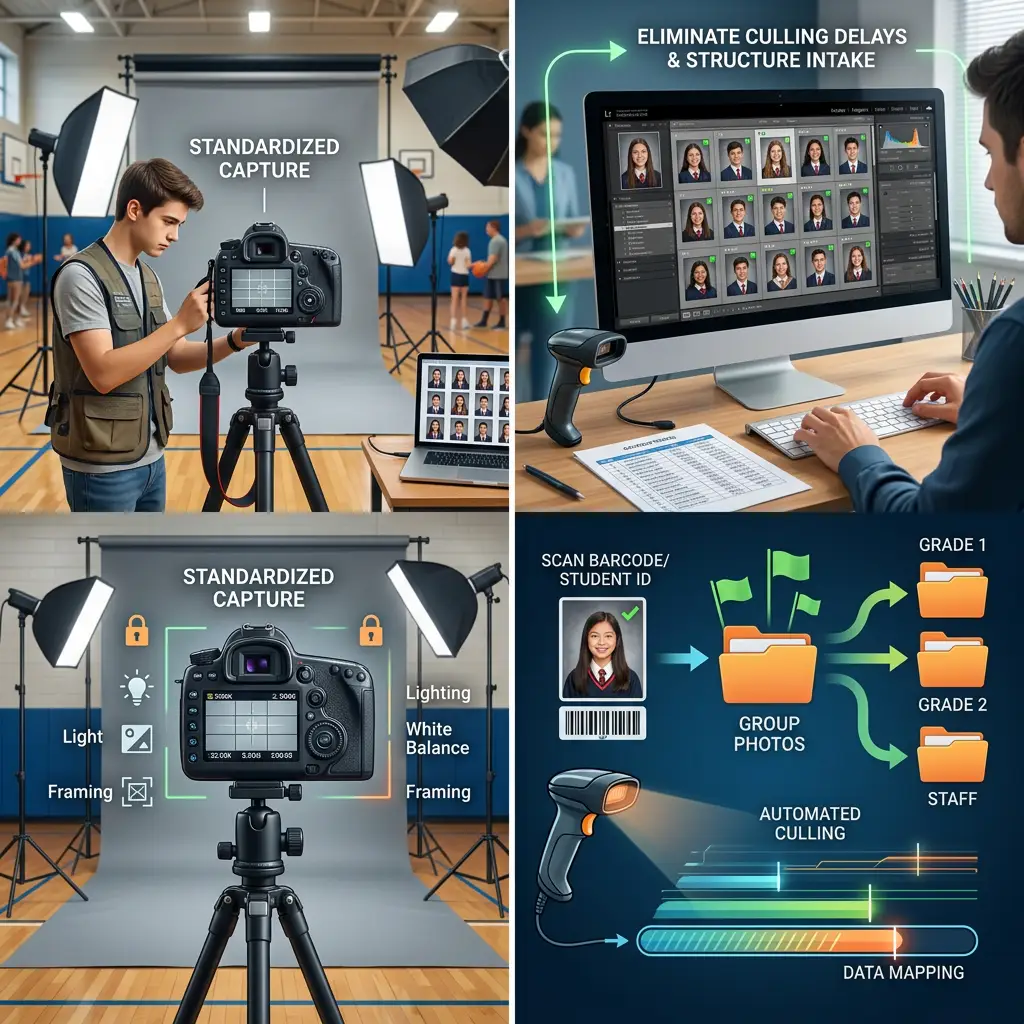
1. Standardize Capture Settings for Faster Editing
Mastering school photography post-production starts long before editing begins—it starts right behind the camera. Variations in lighting, exposure, and framing across different school gyms or auditoriums significantly increase editing time.
To minimize batch correction:
- Use fixed studio lighting setups and standardized gray or white backdrops.
- Keep camera profiles, white balance, and focal lengths identical across all capture stations.
- Implement strict subject positioning guidelines so headroom and margins remain consistent for student ID cropping.
Standardizing capture parameters ensures that global color and exposure calibrations can be applied across entire student cohorts, cutting manual adjustments by half.
2. Eliminate Culling Delays with Structured Student ID Photo Workflow
Culling through thousands of similar student portraits consumes valuable production hours. During peak season, manual culling often becomes a primary bottleneck.
Implement a systematic selection protocol:
- Limit shot counts per student to two or three calibrated frames.
- Train photographers to flag unusable frames immediately during capture using tethered software.
- Use CSV or barcoding systems linked to Student Information Systems (SIS) to automate file organization right at intake.
When files enter post-production properly mapped it creates a seamless student ID photo workflow where editors can immediately focus on core retouching rather than sorting.
3. Separate Routine Edits from Complex Compositing
Not all edits require the same level of skill. Managing high-volume photo retouching becomes much easier when you separate routine crop adjustments from complex group photo head swaps.
Divide your post-production pipeline into distinct tiers:
- Batch Processing Tier: Color balancing, exposure correction, and basic background uniformity across entire grades.
- Precision Technical Tier: Establishing an automated student ID photo workflow for precise cropping, aspect ratio adjustments, and CSV metadata matching.
- Advanced Compositing Tier: Manual head swaps for blinks, glare removal on eyeglasses, and object removal in group shots.
Segmenting tasks allows specialized editors to work in parallel, drastically shortening turnaround times for high-volume orders.
4. Prioritize Student Data Security and GDPR Compliance
A high-volume student ID photo workflow involves handling sensitive child data and student identification numbers. Outsourcing this to unvetted freelance marketplaces poses significant privacy risks.
High-volume studios must enforce strict data sovereignty protocols:
- Partner exclusively with dedicated production teams operating under formal NDA and DPA agreements.
- Ensure all processing occurs on secure, isolated internal servers rather than public file-sharing networks.
- Enforce strict retention schedules where temporary processing files are permanently deleted post-delivery.
Maintaining security in school photography post-production is critical when handling sensitive child data.
5. Partner with a Dedicated Bulk School Photo Editing Studio
To master school photography post-production, smart studio directors scale their capacity by leveraging dedicated backend editing partners.
By delegating your high-volume photo retouching, background replacements, and ID cropping to a specialized post-production team, studios can:
- Guarantee 24 to 48-hour turnaround SLAs during high-volume surges.
- Maintain consistent rendering and strict age-appropriate retouching standards across all grades.
- Focus internal studio resources on client acquisition, shooting, and business growth.
If your studio is preparing for upcoming seasonal surges, explore how specialized school photography editing services can support your volume with dedicated, 100% in-house senior editors.
Conclusion
Overcoming post-production bottlenecks requires a combination of standardized capture, structured file management, and scalable editing support. By optimizing your school photography post-production pipeline, you can deliver flawless yearbooks, student IDs, and class portraits on schedule.